Hey hello again! It’s been a little while and I am sorry for that! There’s been a lot going on! Some of which if it has caused me to bring a story from Scripture that spanned almost two thousand years! So let’s dive right in shall we?
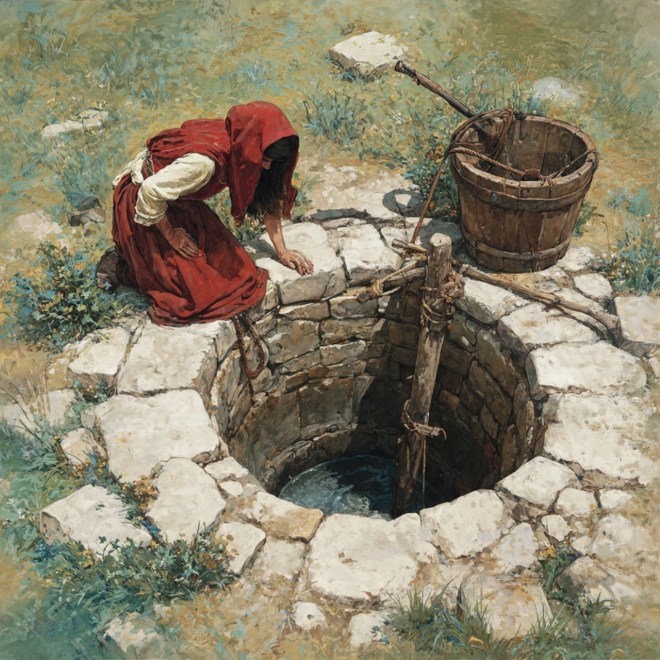
It can get very hot in the middle of the day; ask anyone who works outside in the summer! Especially if you’ve done ait of walking. All you want is that cool, refreshing feel of cold water hitting the back of your mouth. it is in this context we find Jesus on the road halfway in His journey to Galilee. The humanity of Jesus was on display here and he was tired so he sat at Jacob’s Well to cool. It is there we find the Samaritan woman coming to draw water. We know the conversation, the interaction, the joy the Samaritan woman had in running to share the good news of Jesus Christ. This can all be found in John chapter 4, however we want to look at the backstory to this rich account more than just the interaction here between Jesus and the woman.
Some modern teachers, preachers, and writers will interpret this story in John as an example of Jesus breaking down barriers. As someone who crossed racial divides and prejudices to meet someone who was different than him. Often racial, sexual orientation, political, and religious themes are inserted here to prove a point. A point that Jesus himself was willing to cross the line to be friends with others. Why can’t modern Christians? Though these themes are maybe meant well, however they are lacking in context and depth. The the story here in John 4 isn’t about acceptance, or equality (especially as the world defines it). It is about a Holy and Righteous God coming to fulfil a promise that was made millennium ago!
Disregarding the Presentism that is often applied to this account, lets dig deeper. Leaving John 4 you need to go all the back to Jacob in Genesis 35. Here Jacob is preparing to meet God at Bethel. He, and his whole family, buried the false idol and images under this tree and sanctified themselves. It was a solemn occasion, but one that showed they meant business when coming before the great God of Abraham and Isaac. We know what happened after: God specifically blesses Jacob in Genesis 35 with fruitfulness and the promise of the the land God promised to Abraham to be his. Also, not only his, but his descendants as well. But the story doesn’t end there!
Moving forward to Joshua 24 almost 500 years have passed since Jacob burying the idols and meeting God to where we find Joshua here. If you look in verse 1 all the leaders of the tribes are gathered at Shechem with Joshua to hear from the Lord. Joshua then proceeds to give the Word to the people. For the next 24 verses Joshua lays out the history of the people up to that point. He shows them God’s faithfulness, righteousness, and justice. Then while standing over the same place Jacob buried his idols, Joshua commands them to throw away their idols! He then puts forth the famous ultimatum that all fathers should proclaim in verse 15. To which the people agree, and then he sets a stone up in verse 26 under an OAK TREE AT SHECHEM! Now part of me gets tingly every time I read this. Because in short here is what you have: Joshua proclaiming God’s promises, and His faithfulness by the many examples he gave; at the very place Jacob buried his idols and past to meet God to receive a promise and an inheritance that he wouldn’t get to see! Over four hundred years and a complete round trip and the people of Israel were able to see the promises of God on full display as they dedicated their lives to God. God is faithful to His people, but it doesn’t stop here!
Moving forward we see Joseph was buried there, then on to Judges 8-9 we find Abimelech, Gideon’s son. He set up a reign as a self appointed King in, you guessed it, Shechem. But it was not a divine commission and it failed due to not being sanctified of God. He tried to appoint himself at the very site Joshua put the covenant with the people at the tree in Shechem! The significance of God’s versus man’s covenant was on display in that account.
We also see 1 Kings 12 where the people once again gathered at Shechem and appointed Rehoboam as King, which caused the kingdom to split into Israel, and Judah. Again the damaged caused when people try to assert themselves over God’s will is shown in the story of the Kingdom of Israel being divided.
So you can see that this place at Jacob’s well in Shechem has a rich history of God revealing Himself to His people there, and the devotion of the people to God by their dedication, and covenants made with Him. From the burial of idols, to the dedication of their lives, the people of Israel knew the history of this place, and the significance of the promises made there. Which is where we come back to Jesus in John 4. With Jesus presenting another Covenant with the woman in verse 14: “But whosoever drinketh of the water that I shall give him shall never thirst; but the water that I shall give him shall be in him a well of water springing up into everlasting life.” Salvation! What a promise to give to this woman who’s ancestry had longed for that complete acceptance into the family of God again! After this she proclaimed Jesus’ words to the people of the city. Then after a few more days of teaching, and many believers later, Jesus left. Having now proclaimed Salvation and the Showing of himself as the Messiah in verse 26 to a people who were descendants of Jacob!
Do you understand the true significance of the account of the woman at the well? It isn’t about breaking racial divides. Certainly not about accepting someone who’s sexual orientation is different. But everything to do with a promise God made to His people in Joshua 24 that was built on the covenant that God proclaimed to Jacob In Genesis 35. A covenant that would be theirs if they surrendered to God and kept him first, and here we have Jesus now saying He is that Messiah and the one to bring Salvation!
What a story of profound significance to the people hearing it! We may miss some of those details in a short reading of John 4, but Jesus is showing His power to a people that were outcast from Israel but still children of the promise. But even more importantly Jesus is extending Salvation to a people that were outside of the “Kingdom” of Israel in the eyes of the people in that day. It shows the faithfulness of God. It shows the mercy of God, and it shows the promises of God are real.
The big reason I am so moved, and love the story of the woman at the well goes even past John 4. It shows to me, a lost sinner saved by grace, that God cares about the people that are His. Almost two thousand years had elapsed between the covenant with Jacob to Jesus Christ showing Himself to the Samaritan woman, but God never wavered. And in HIS time he came forth to proclaim salvation to a people who were alienated from the old covenant. And at the very place He made it with Jacob!
So take heart, when we share the Word of God with people, or are discussing the facts of the Bible. Use this story and the history of Shechem to show that God does care about us. He has a plan. He longs for us to be His Children. But most importantly: God is faithful to show His power and sovereignty even when humanly speaking it seems the life, or situation is to far gone!
Here are the words of a familiar hymn to share as we remember God’s faithfulness as we keep living for Him!
Great is thy faithfulness, O God, my Father;
There is no shadow of turning with thee.
Thou changest not, thy compassions, they fail not;
As thou hast been, thou forever wilt be.
Refrain:
Great is thy faithfulness,
Great is thy faithfulness,
Morning by morning new mercies I see.
All I have needed thy hand hast provided;
Great is thy faithfulness,
Lord unto me.

