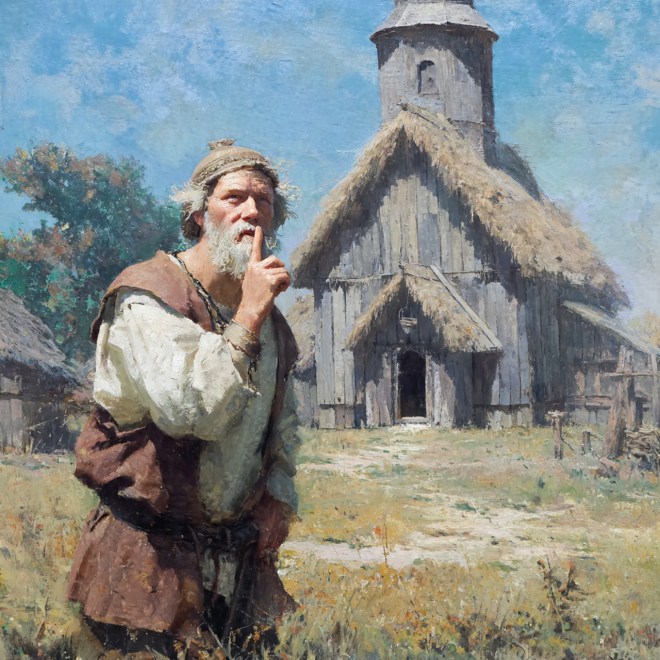
For this week’s blog I thought it would be interesting to look at a phrase attributed to Anabaptists, and where that phrase came from. That phrase is this: “The quiet in the land”. It’s commonly attributed to Anabaptists because of their peaceable and quiet lives built around church and family values; producing good work ethics and low chaos in their local communities. Now we know we have a command in 1 Thessalonians 4:11 to live quietly; however this phrase doesn’t come from a Bible verse, but actually isn’t a compliment if you dig a little deeper. What if when we stop and analyze this phrase do we actually look inward and ask the quiet question in our minds “Should I really be known as quiet in the land” When it comes to my faith in Jesus Christ? Let’s dive right in shall we?
The phrase can be first attributed to Anabaptists in the Palatinate Valley in Germany. See there was intense persecution and strife for the Anabaptist churches in Switzerland and Germany so in 1644 (After the Thirty Years War land was left barren and needed tending to) the German government offered Mennonite families an opportunity to move to this newly conquered area in southeastern Germany in the Palatinate Valley. However, with this new-found opportunity came with some stipulations. They included: no more than 200 families, no church buildings, and absolutely NO evangelism to their Catholic, or Protestant neighbors.
Now, what would you do if you were facing death? If you were a parent and wondered what would happen to your children you were raising for the Lord if you were arrested? Or worse killed for your faith? What if you were left poor and destitute because the local authorities claimed your land? Because as an Anabaptist you were considered an alien in the country of your birth. So with these things on your mind would you take the offer? Would you move and deny your commission as a follower of Christ in Matthew 28 to spread His Gospel message? Could you move to a place of peace if it meant denying aspects of your beliefs?
Makes you wonder doesn’t it? Now, we cannot apply present criticisms to past situations. We simply weren’t there and didn’t face those trials to fully understand the heart wrenching choices that had to be made. But I think we can soberly look at the event of moving to the Palatinate Valley as a somber footnote on the downward spiritual decline in a vibrant church group. You see like Benjamin Franklin once said: “Those who would give up essential Liberty, to purchase a little temporary Safety, deserve neither Liberty nor Safety” I wonder if the same can be said of the Believer in Christ. We have not faced that level of persecution to know how we would react, but would we give up biblical truth for a lesser price to pay in persecution?
After a few years of their new life in the Valley they started to be called the “Quiet of the Land” because they stuck to themselves, met in plain in homes with no elaborate church buildings to be found, and were amazing workers who quietly did their work and stuck to themselves. But, like always, when the focus is not outward, the sights shift inward. And so it was that the quiet and peaceful life of the Anabaptist churches was starting to creep into a more lukewarm and even an apostate culture brought on by a prosperous and low-conflict life in the Palatine. To the point that internal struggles developed between ministers on both sides of arguments that arose.
Arguments like nonconformity to the world, how to deal with sinning members in the body, and the amount of wealth and riches in their lives became common place discussion in church meetings until sadly it finally spilled over and in only twenty years since their move the whole group tragically divided. You see when there is no persecution and active evangelism of Christ’s body the enemy works dutifully so sow seeds of doubt and discontentment in the body. Both sides had good arguments. Both sides could have worked it out. But sadly there was no willingness to repent of lukewarmness, and an unwillingness to continue fellowship. So in 1693 the group following Jakob Ammann left and would go on to maintain a strict separate lifestyle from the world, as well as in their doctrines and later would be called the Amish. The remaining families would go through a period of revival and would later emigrate to America. While others would seek opportunities in the Russian Empire, after an invite from Catherine the Great, and sadly would become more lukewarm.
I say all this to not beat on, or criticize the Palatinate Mennonites but simply to offer this history lesson as a teachable moment. We have examples in history, and more importantly in the Bible ( Lot, Samson, Balaam, the Children of Israel) of people or groups that took the easy road and that path will inevitably lead to apostasy and loss. The Palatine Anabaptists are no exception. They gave up some core principles to live in temporary safety; and we as modern Christians are doing the same.
We stress over our bank accounts and possessions as if they are wholly ours, while at the same time forgetting who actually provides for our daily needs. We struggle and push to make sure our voice is heard on subjects we think truly matter in the life of the church, but are missing the weightier things. While uselessly debating things that do have little importance in the end, and we are failing to be that city on a hill or the candle lifted high. All while Satan is probably laughing at our distracted lives and weak flame as the path to Hell is vibrantly busy. Am I the Quiet in the Land? Are you? Please by the grace of God let’s not be! Do people see in us what really matters? Or are they seeing the daily grind take our focus off of Christ and His Gospel message? I hope we can all be strong and vibrant apologists for our Lord and Master Jesus Christ and not be distracted by our enemy!
I will leave you with this poignant song from Casting Crowns to consider:
“Did you hear of the city on the hill?
Said one old man to the other
It once shined bright and it would be shining still
But they all started turning on each other
You see, the poets thought the dancers were shallow
And the soldiers thought the poets were weak
And the elders saw the young ones as foolish
And the rich man never heard the poor man speak
And one by one, they ran away
With their made up minds, to leave it all behind
And the light began to fade, in the city on the hill
The city on the hill
Each one thought that they knew better
That they were different by design
Instead of standing strong together
They let their differences divide…“
Let’s not be the quiet of the land but boldly proclaim the Gospel message while we still have today!
 Jude 3