Ah, the age-old question from Hamlet; “To be or not to be..”. Or, should I or should I not? It is used to make a point when contemplating a situation or posing a question. Let’s try it this way: What’s the most common Italian vegetable in Italian dishes? You’d be forgiven if you said tomatoes, but did you know that is not an original Italian vegetable? Oh no, only within the last 400-500 years has it found a place in every Italian cliché out there. So where did it come from? The Andes Mountains of South America! Is it an Italian vegetable? Well, it is now, but not originally. Both Hamlet and the tomatoes are called presuppositions. We suppose tomatoes are an Italian food, but they aren’t, and Hamlet’s musings of calamities. Both are presuppositions that people will come to based on their own experiences in life. This is what you can mull over as we start our third avenue of Apologetics: Presuppositionalism.
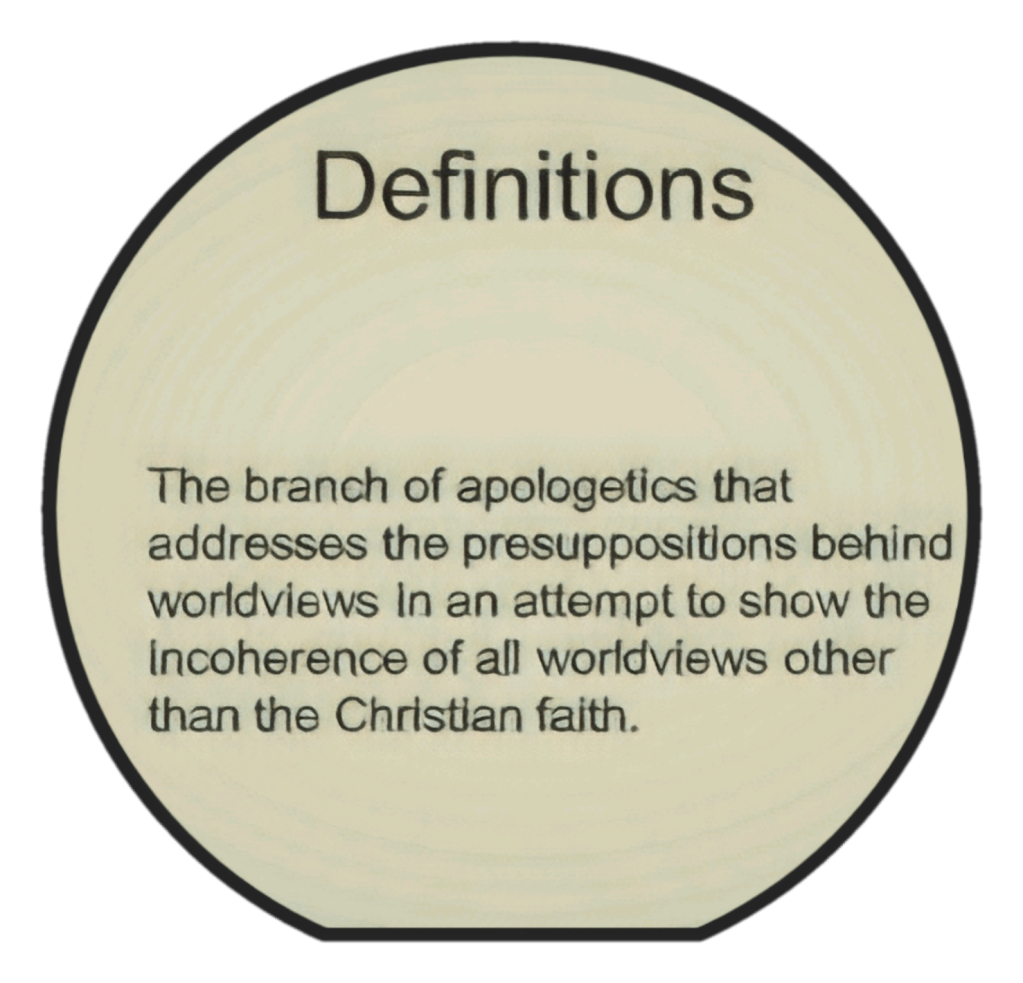
Presuppositionalism is an apologetics thought that among other things will narrows down all world views into two camps of either the 1. The existence of God, or 2. the non-existence of God. And that a persons opinions, or theories, on the matter all stem from their past experiences. The thinking of Presuppositionalism requires a very sure understanding of the Fideism, and Evidentialism types of apologetics, but it can be effective on its own as well. We will break down this style of apologetics in a couple ways. So let’s look at some views the about the existence and non-existence of God.
Someone who doesn’t know about God or may choose to reject the truths of Scripture will do it because they were raised to disdain or ridicule the very idea of a Creator God and the Scriptures that teach of Him. Or they simply did not hear about Him or the idea of Salvation through Jesus Christ. Further still it may be they had a hurtful or painful experience from being in a Christian church or family. How do you show someone that God does indeed exist and cares for them even in their pains, hurts, ridicule or shame? When talking and interacting with someone in this camp it is important number one be in prayer and to draw heavily from the Romans 1 passage we looked at last week titled “The Evidence of Things”, which can be used to demonstrate God’s existence and plan to be served by His creation. Especially when talking about the idea of the truth of creation pointing to God, but being silenced by the sins of this world in verse 18. Next, the hearer needs to be directed to places in the Bible like Matthew 6:24 where Jesus says we cannot serve two master. Now, in context, Jesus is speaking to the battle between God and money, or possessions; but that biblical truth extends beyond that. By denying that there is a God because of my preconceived notions or presuppositions is actually by default saying that you are choosing instead to identify without God. You either serve and recognize Him, or you don’t. And in that regard Presuppositionalism is right. To simply say I don’t believe in God because of my life experinces does not make it true if the evidence in creation and Scriptures say something different.
Another aspect of Presuppositionalism is to determine that, along with my ideas of God, my UNDERSTANDING of Him has to be from Scripture. I cannot bring my notions of how God operates or teaches based on my own feelings or notions. It’s often been said that how we view our earthly father is how we view God. That is a presupposition that is not accurate. We cannot come to God expecting hand outs of mercy and grace (Romans 6:1-2) when we willfully sin because our earthly father never gave us the consequences our sins deserved. Yes there is grace, yes there is forgiveness and reconciliation, but we cannot willfully sin against God and expect a “buddy” relationship. Just as much we cannot view God as a tyrant waiting for our next failure to strike us down! Both presuppositions are not compatible with what Scripture says of Him. 1 Corinthians 2:1-6 shows us we have to have a proper understanding of God, Jesus and what he has done to be able to grow in Him.
Another thing about Presuppositionalism that is important is to not validate the views of the one bringing the preconceived ideas. Heres why: because of Proverbs 26:4-5. Now don’t get me wrong, we do err in showing Jesus love to call someone a fool (Matthew 5:22). But we must not support the foolishness or wrong ideas that someone may have when it comes to Knowing God, or understanding Him. We have to continually take them back to Scripture. Which can only be done when we are in the Word as we should be, and allowing the Holy Spirit to lead us!
To argue (in a good way!), or debate with someone in the Presuppositionalism way requires a deep ability to HEAR the speaker. Listen to their concerns and feelings, but understand that those things do not reflect Scripture. We cannot feel something and then make Scripture support it. It must be the other way around; and we can know that with authority because Jesus said it! We know Jesus is God because of the fulfilled prophecies, validated claims, and miracles performed. So when Jesus prays for His Disciples that God would “sanctify them through thy truth; thy word is truth” in John 17:17, He is making a declaration. A declaration saying God’s Word, Scripture, is the truth. And only in that can we be sanctified and ready for Him. We cannot argue cunningly devised fables( 2 Peter 1:16), but instead rest on the confirmed promises in Scripture (2 Peter 1:19). So while we must here the heart of the person, we cannot support those feelings if they are contrary to the Bible. But, instead show Scripture to be able to satisfy and silence any presuppositions people may have.
Have I muddled the waters? Does this make sense? I trust it has. This is only a glimpse of the Presuppositionalism view of apologetics and is much more broader than can be covered here right now. It’s also one of the more in-depth and often confusing views of apologetics but one that can be effective when coupled with Fideism and Evidentialism. Presuppositions are things we all have and can struggle with when coming to God, but we must be grounded in the Bible to then with assurance be able to win the struggling mind of an unbeliever. Only then can we effectively use this view.
I serve a risen Savior
He’s in the world today.
I know that He is living,
Whatever men may say.
I see His hand of mercy;
I hear His voice of cheer;
And just the time I need Him He’s always near.
He lives, He lives, Christ Jesus lives today!
He walks with me and talks with me along life’s narrow way.
He lives, He lives, salvation to impart!
You ask me how I know He lives?
He lives within my heart.
 Jude 3