From being a fur trader, to being a traveling preacher in three different regions and denominations, Melchior Hoffman started strong but finished off course. What lessons can we learn from his story? Let’s find out!
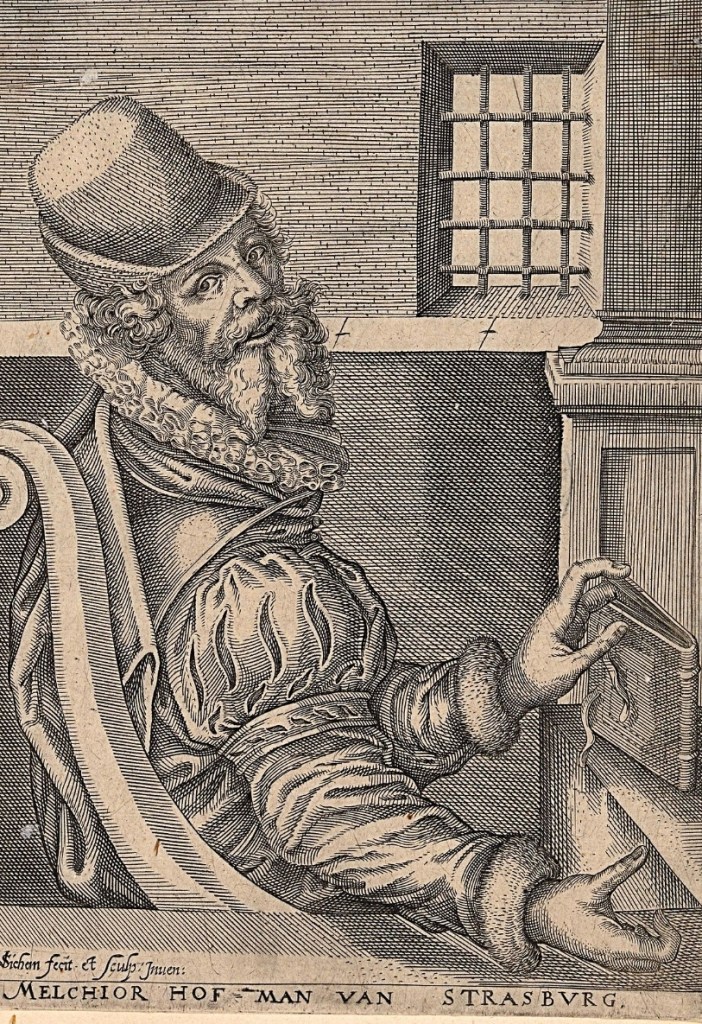
The story of Melchior Hoffman is quite interesting, yet long, when it comes to his early life to adulthood in Christianity. Born in 1495 into a middle class trade family in Germany, he received a good education early on and became a furrier and cured and traded furs. He first started out attracted to Martin Luther’s reform and preaching. He became a traveling lay preacher and went to Latvia, Estonia, and Sweden in the early 1520s. Each city he went to he was eventually expelled because of his style of preaching, or his teaching. He then went to Denmark where he found some favor with King Frederick I and became an established preacher there.
We will look at some examples of Hoffmans life, while also comparing his life with Scripture to better understand lessons we can learn from him. First, let’s look at what other people’s influence can have on our life. Hoffman was a charismatic person who, to often, built his belief system on the influence of what others said, and less on what the Word of God said. There are many examples of him either changing his beliefs, or preaching because of what a man claimed he heard from God, or what he had heard someone tell him. His inability to adhere to scripture on issues like the return of Christ, the Judgement, and Heaven all had a profound influence on his theology. Do we face that in our life? Are we focused on what our friends think we should do or what God says we should do? Proverbs 13:20 says “He that walketh with wise men shall be wise: but a companion of fools shall be destroyed.“. Our friends, or acquaintances have a profound impact on our thinking; that is why it is so important to have a network of Bible-based friends so that we can fulfill another Proverb lesson in 27:17 “Iron sharpeneth iron; so a man sharpeneth the countenance of his friend.”.
Secondly, we will look at theology. Because someone says they’ve received a vision, or thought of the Lord do we just believe it? Absolutely not! We look to scripture to see if that lines up. Look at verses like 1 John 4:1 “Beloved, believe not every spirit, but try the spirits whether they are of God: because many false prophets are gone out into the world.”, or “For the time will come when they will not endure sound doctrine; but after their own lusts shall they heap to themselves teachers, having itching ears; And they shall turn away their ears from the truth, and shall be turned unto fables.” (2 Timothy 4:3-4). You can also look up verses in 1 Timothy 6:3-5, Jude 1-4, also acts 17:11 is a great example in scripture of people who compared preaching, or teaching, with the truth found in scripture. It is vital to do that. Melchior Hoffman did not do that as often as he should have. There are many books, and article that talk about various aspects of his life and his pursuit of truth, often going to other men’s teaching or to them in person to get bearing, instead of to the Word.
Thirdly, let’s look at the effect our relationship with God and His Word has on those around us. It’s been said by Joseph Goebbels(Hitlers Minister of Propaganda) If you tell a lie big enough and keep repeating it, people will eventually come to believe it.” the same can be said on the lifestyle we live and the words or teachings we share with people. If we live out the truths of God’s Word, people will see we mean what we believe, the reverse is also true; if we live our lives as if God’s Word is of little importance, that can be seen as well. Hoffman was a charismatic and likable preacher because he believed what he taught (until he didn’t), and had massive amounts of followers in the Netherlands alone, but most places he went people started to see his words did not line up with Bible principles. Which eventually left him needing to find a new place to go. Whether we share with a coworker, friend or family; the words we share had better be rooted in scripture and biblical teaching and not just repeating what we hear from other men or women of God. We cannot have an impact on the world around us if we are not in God’s Word and letting it change us. No amount of podcast, blog, or book will give us the strength and knowledge we need to be a light and salt to this world. It is found only by being in the Bible and applying the teaching in it as the Holy Spirit leads. Hebrews 4:12 is a very important verse when it comes to understanding this.
Lastly, it can not be denied Hoffman had a profound impact on the northern European and Dutch churches, especially when he started preaching in the Dutch anabaptist church. So, because of his preaching many people came to know Jesus Christ as their Lord and Savior. Does that mean those conversions were wrong because the preacher turned out to be a false teacher? No. And we will look at a little in the next blog, but for Hoffman he had preached salvation through Christ to many and they had come to know the Lord in light of those truths in Scripture. While some, like Jan van Leiden and Jan van Matthijs, carried his end times preaching much further in the Munster revolt, others he influenced like Obbe Phillips and his brother taught biblical truth from the Word. So the impact we have on our friends and vice-versa is again profound. We might not see it always, but it is having an effect in words, actions, habits and eternity. Melchior Hoffman to often let the voice of people influence him, instead of staying in God’s Word and building on the truths found in it. Disillusioned, He eventually turned himself in and is thought to have recanted his stance on earlier issues. Not much is know for the next ten years of confinement until his death around 1544.
I realize there was a lot we did not look at in Melchior Hoffman’s life. From his time as a Zwinglian preacher, to the almost decade he was in the Anabaptist church. Time and space just do not allow it! What I wanted to look at is how can we apply some areas of his life to ours. While he had great influence for the good in 3 different denominations (Lutheran, Reformed, and Anabaptist), his false teaching and later influence on the Munster rebellion is really all he is known for today. Which is sad, but also a warning. We can do so much good for God, but all it takes is that one grave error and that can be what people really remember us for. The examples we need to leave above all else is this: Do we show Christ and His Gospel to the lost world around us, and do we really live like we believe what we say? People will remember us, and far to often, it’s our actions rather than words that are remembered. There is a poem that goes well with thinking of Melchior’s, or our lives:

So what do you think of Melchior Hoffman? Good? bad? What would you want to be remembered as on this earth? Does it matter? There are a lot of questions I’ve asked myself when I’ve studied on this individual for the last number of years. However, after my musings I think of what Jesus told the servant in Matthew 25:23 and I conclude that I will focus on what my Lord says I need to do and be. That will mean all the importance in the world!
 Jude 3