Knowing the meaning of each makes all the difference in the world.
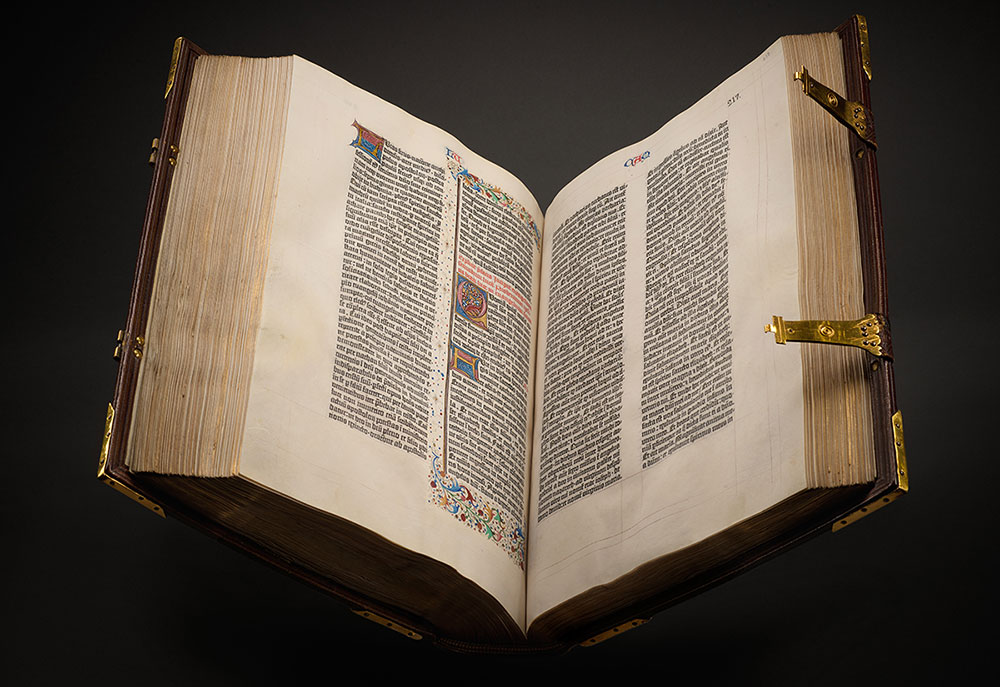
Immediately following the resurrection of Jesus, the Apostles went about teaching and preaching of Christ, growing the church, and spreading the Gospel. The worry wasn’t about writing it down, but sharing the news of Jesus and His resurrection. The Apostles starting writing things down to bear witness to their verbal testimony to share to the truth of the events they saw (introduction verses in Luke and Acts, as well as in John 20:30-31, 21:24). The same is true of Paul’s writings, he wrote to bear witness, he preached to bear witness (Col. 1:28-29). Now ultimately these writings were all given by God (2 Timothy 3:16-17) to each writer to share to the believers then and beyond, but we also see where the Apostles knew they had to write this down to share, as well as what they preached.
So they wrote it down, okay big deal you might say. Yes, it is a big deal! Without the writing there would be nothing to pass on, nothing to verify that the eyewitness accounts were recorded and kept. So the words we have from the Holy Spirit filled men of God were written and kept so that the message of Jesus’ Gospel, and the new Way would be known to future people; This was understood by the time of the 2nd century had started to roll around. Preserving and protecting the word of the God given to the Apostle was what led to an organization of a canon or “measuring stick” of the Word of God through the Apostles.
It really started around 130-140 AD by Marcion of Sinope. He was really the instigator of collecting together the writings of the Apostles and making them into one book. The only problem was he was at one time a believer who strayed into rather blasphemous and dangerous doctrines regarding Jesus not being from Jehovah God of the Old Testament(Read up on the guy sometime), he was the son of a church leader and started dabbling in gnostic and erroneous teachings that eventually landed him being excommunicated from the church for his unrepentant views. So what to do with a fallen brother who goes his own way and starts collecting writings that reaffirm his thinking and views? Well you have to counter that, so the church did! Up to him gathering a unofficial canon, the church didn’t really bother because they knew by word, or tradition what was the true works from God, and what wasn’t (Justin Martyr, Irenaeus, Ignatius all held to the traditional view of the Gospels, and Paul’s Epistles), though some disputed over Hebrews, James, 2 Peter, 1-2 John, along with Jude and Revelation. The New Testament books were widely accepted and used along side of the Old Testament Scripture to encourage, exhort, and preach Salvation to the Jew and Gentile. Still, there had to be a concise canon of what was understood to be divine and inspired and what wasn’t, which, came about after much prayer and discernment in the Council of Rome in 382 to try to put an end to books containing false teaching or heresy that did not align with known Scripture.
Going beyond the Apostolic age (30-100 AD) and into the Anti-Nicene Age (100-325 AD), and even further, you start to see along with the role of settled scripture, there became oral and written traditions that were being passed down in the church. Which was nothing of itself wrong with that. It became evident that there were writings, and commentaries on the doctrine and history of the church that were held almost in as high regard as the Bible itself. Some of those can be found in the Ante-Nicene Fathers.
Once out of Constantine’s influence in the church, you start to see a much more willingness of the church as a whole to put tradition, extra-biblical works, and leaders words on par with the Bible. Which ultimately led into what is termed: Prima Scriptura, or Scripture being the “prime” use, but others allowed as long as it lines up with Scripture. Which in of itself doesn’t sound to bad, but left unchecked can become a ripe field for false teaching being allowed, since who is to define what any one verse means? We have to go to commentary or a speakers words on the matter which then feeds the viscious circle of Prima Scriptura. Denominations such as the Anglican Church, Methodists, and Pentecostal primarily are followers of this line of hermeneutics. Although you will find this thought scattered in many Christian churches. Prime Scriptura is rooted in facts: the Bible is prime when reading or studying in theological studies. However, it becomes neutered and loses any value when you then say that any book or commentar, or thought is okay as long as it lines with Scripture; and that is where it gets tough to defend that line of thought. Unless you are rigidly taking and comparing Scripture with Scripture you can make an argument for a lot of loose principles and ideas. Which on the surface seem to match and align with the Bible.
As time rolled into the 1500s you started to see a greater push from reformers like Martin Luther, Ulrich Zwingli, John Calvin, Menno Simons all held to the belief that was contrary to what was held for the Post Ante-Nicene Age and that was: SOLA SCRIPTURA. Meaning the Bible was the sole authority in the believers life, and the church. This thought was given renewed life during this time because of the over reach of the Catholic church, as well as the general lack of biblical teaching. Instead being replaced with papal writings or ecclesiastical orders. The Reformation was built on the idea of God’s Word being the sole, and final arbiter of truth, not man’s opinions of the word.
What Sola Scriptura is understood to mean is that the Bible has, and gives all the direction we need as believers. We do not need to simply go by what man says, but to give ourselves to prayer and the leading of the Holy Spirit as we read and He will teach the believer in the truth of the words. It does not mean that we disregard tradition, or the counsel of others it just means that in all things the Bible has the final authority and guidance in all areas. Nor does it mean believers need to live off by themselves and ignore the body of believers, or ignore biblical exhortation (Hebrews 10:25 alludes to this!) All teaching and doctrine for our lives as Christians Should be solely based on the Bible and not man’s words.
The idea that only the Word of God is to be our guide is in the Bible. First is in the familiar passage found in 2 Timothy 3:16. “All Scripture” is used for all the teaching, direction, and correction a Christian needs. Furthermore we have direction from Jesus in Mark 7:1-13, and in Matthew 22:29 that tell us all we need to grow in Christ, and to test what we hear. It is the only, and FINAL authority in all matters.
Do traditions matter? Absolutely! The Apostles taught that in Acts 2:42, 1 Corinthians 11:2, 2 Thessalonians 2:15, and 3:6. They encouraged the believers in the words and doctrines taught to Discples by Jesus. It became the “tradition”, if you will, of the early church. Some traditions are great examples to point future generations back to Bible-based principles and doctrines. All traditions whether in personal, or Church life, should be grown out of Biblical truths and applied principles; nothing else. Traditions, commentary, and other voices have their place in the life of the believer, but only when the Bible determines it, and not the other way around.
So Prima Scriptura or Sola Scriptura? Both are right, but both can be abused. The abuse of one led to a grand awakening of Christ’s Bride, while the misuse of the latter can be the rallying cry to ignore the Godly ordained men we look to for direction and leadership in our churches today. The bottom line is, the Bible itself teaches to honor the traditions of the Apostles and the church. And those traditions should only be based on Sola Scriptura, or the Bible alone. So you see how neatly those two thoughts actually coincide together? The problem is when we selfishly pull to much on one, the pair breaks, and we then develop problems.
I’ll leave you with some powerful verses that remind me of God’s power and guidance in His Word, Hebrews 4:12 says it like this: For the word of God is quick, and powerful, and sharper than any twoedged sword, piercing even to the dividing asunder of soul and spirit, and of the joints and marrow, and is a discerner of the thoughts and intents of the heart.
 Jude 3